What restaurant music really changes: pace, spend and brand fit
Restaurants are more than just food and service, they are complete sensory experiences. Discover how the right music strategy can shape pace, influence spend, strengthen brand fit, and elevate the guest experience.


Walk into a restaurant at breakfast and the room needs one thing. Return at lunch and it needs another. Come back in the evening and the atmosphere should shift again. The mistake is to think music simply fills those moments. In practice, it helps shape them. It can influence how a room moves, how long people stay, how the space is judged, and whether the overall experience feels thoughtful or oddly disconnected. Research into restaurant environments has linked music to dining duration and customer behaviour, while Welcome to the Experience Economy helps explain why every sensory detail matters more than ever in hospitality.
That does not mean music works like a magic lever. Restaurants are more complicated than that. Food, service, lighting, acoustics, layout, staffing, price point, and guest expectations all shape the outcome. But it does mean that music deserves more attention than it usually gets. Too often it is treated as a finishing touch, handed to staff, left to generic playlists, or shaped around personal taste rather than the guest experience. That tension comes through clearly in Altaura's Iron Hill Brewery case study, where a strong food and drink offer was being undercut by a soundtrack that lacked consistency and intent.
Music can change the pace of a room
One of the clearest findings in the literature is that music can affect dining pace. Ronald Milliman's restaurant study from the Journal of Consumer Research remains one of the foundational pieces of work on background music and patron behaviour. Later research from Caldwell and Hibbert looked at how tempo and musical preference relate to time spent dining, spending, enjoyment, and future intent. More recent field work, including a 2024 restaurant experiment on dining duration, tips, and bill amounts, continues to support the idea that tempo can alter dining duration even when spend effects are less consistent.
The important point is not that slower is always better, or that faster music should always be used to move people through. What matters is whether the soundtrack supports the behavioural goal of the service. A breakfast service under pressure may need enough lift and clarity to keep the room moving comfortably. An evening service may benefit from more space, more depth, and a slightly slower sense of time. Good music strategy is less about manipulating people than about aligning the feel of the room with the purpose of the service.
We have seen that play out in practice. In one of our dining spaces, adjusting the music helped reduce average breakfast turnover time by 6 minutes, easing peak wait times without negatively affecting spend. That kind of shift matters because it improves flow without making the guest feel hurried. It is also why playlist strategy should sit alongside wider conversations about sound, acoustics, and comfort. Pieces such as Forbes on why fine dining restaurants need to get acoustics right and John Mariani's Forbes article on what makes a perfect restaurant underline the same point from a more mainstream perspective.

Music can also influence what people buy
Pace is only part of the picture. Music can also influence spending behaviour, though the relationship is rarely simple. A widely cited study by North, Shilcock and Hargreaves found that musical style affected restaurant customers' spending, while Caldwell and Hibbert's work also examined the relationship between music conditions and spend. The broader takeaway is not that music acts like a direct sales trick, but that it changes the atmosphere in which decisions are made.
The more credible way to frame this is that music helps shape the conditions in which certain behaviours become more likely. Guests may stay slightly longer, feel more comfortable ordering another round, or become more open to a fuller experience of the menu. When the room feels coherent, people often respond more positively to everything inside it, not just to the playlist itself. That wider sensory link is echoed in mainstream writing on the booming business of background music and in wider hospitality coverage that treats atmosphere as part of the offer rather than a decorative extra.
We saw that in another project where we measured customer spend across two months using the same volume of covers in each month. During the first month, the venue played randomly selected music. During the second, it moved to on-brand music. The result was a 25 percent increase in desserts sold and a 73.1 percent increase in dessert revenue. That is best understood as an atmospheric shift first. When the soundtrack feels coherent, people settle differently, notice different things, and often become more open to one more course. The Guardian's feature on how restaurateurs choose the perfect dinner playlist captures the same principle from the operator side.
Why brand fit matters more than simply turning the energy up
If there is one idea that deserves more attention, it is congruency. Not all music works equally well just because it is upbeat, premium, well known, or current. Demoulin's field experiment on music congruency found that congruent music improved pleasure, quality perceptions, and return intention, while research on perceived authenticity in restaurant settings showed that fit can matter more than simple enjoyment of the music itself. In practical terms, that means the best soundtrack is not the most energetic one. It is the one that feels right for the concept, the clientele, the cuisine, and the time of day.
This is where many hospitality spaces fall down. The interiors may be strong and the food may be excellent, but if the soundtrack clashes with the room the whole experience loses cohesion. Critics and diners return to this problem again and again. Jay Rayner's still-relevant Guardian piece, Great meal, but spare me the soundtrack, and Grace Dent's more recent review of a room where the music crept louder with every plate both underline how quickly the wrong soundtrack can flatten a carefully built dining experience.
The lesson is not that every dining room should be quiet, restrained, or polite. It is that sound should feel intentional. A room can be high energy and still coherent. It can be soft and still feel flat. Energy on its own is not the goal. Fit is.
A restaurant should not sound the same all day
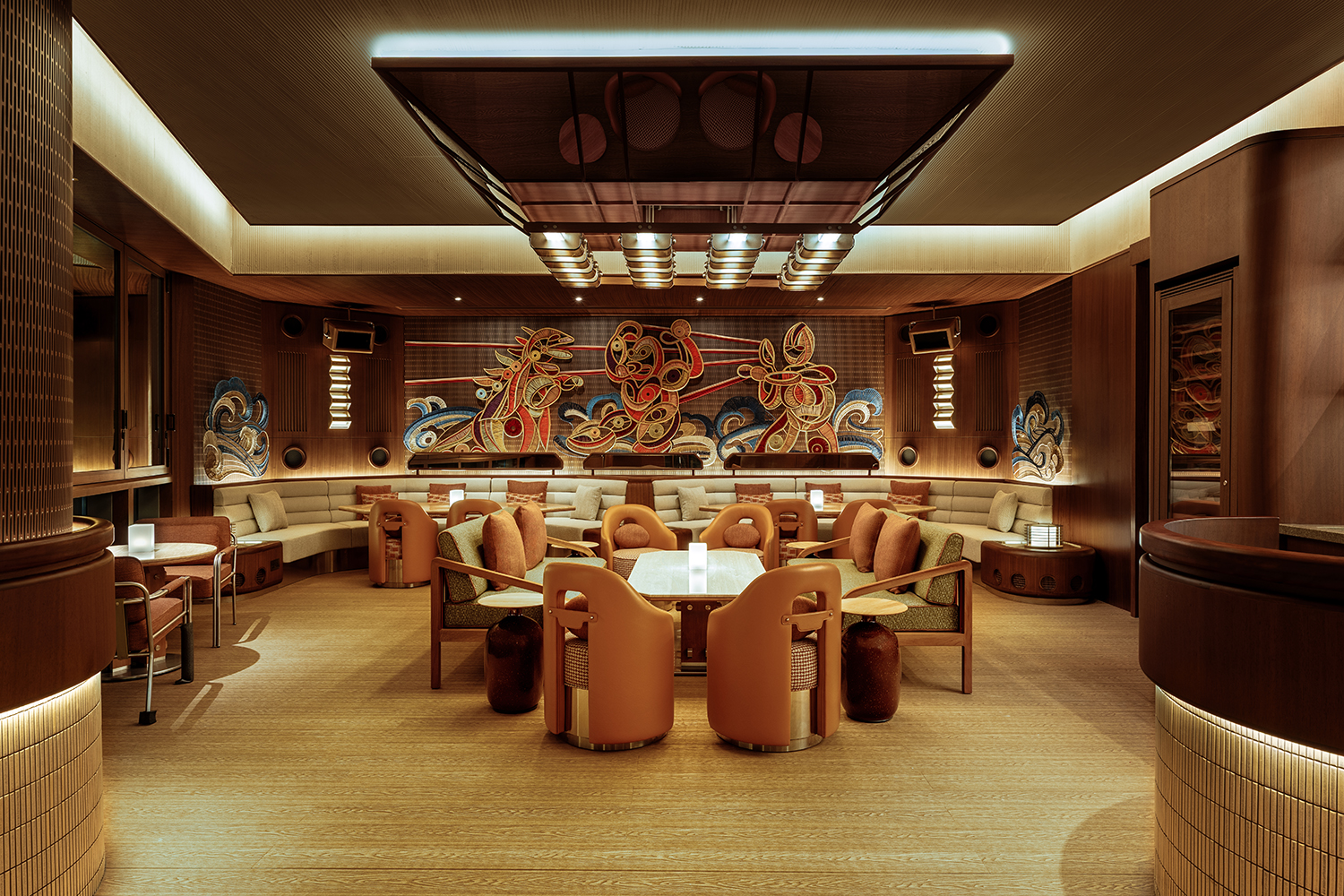
Another common mistake is treating music as static. In reality, restaurants often need a changing energy curve across the day. Breakfast, lunch, early evening, and later evening are not the same kind of social moment. The atmosphere should evolve with them. The challenge is that these shifts still need to feel like the same brand. A room should not sound identical at 9am and 9pm, but it should still sound like itself. Milliman's tempo research helps explain why these changes matter, while the broader experience design lens from HBR helps explain why they should feel intentional rather than accidental.
This is why dayparting matters. At breakfast, music may need to support clarity, ease, and momentum. At lunch, it may need more lift while still leaving room for conversation. In the evening, the role of music often expands. It can help a room feel warmer, more social, and more defined. But these changes work best when they are carefully shaped rather than abruptly swapped. The room should move naturally, not feel as though someone has simply changed station.
Case studies: shaping energy without losing identity
Our work with Burger & Lobster reflects that idea. The aim was not simply to make the brand more energetic, but to create a soundtrack that could move naturally from day into evening without losing its character. When the project began, music had been left to staff choice, which meant the atmosphere could feel generic and inconsistent. The challenge was to build a soundtrack that could create atmosphere, support connection, and encourage lingering, while still feeling unmistakably like the brand.
At Iron Hill Brewery, the issue was slightly different but familiar. The brand is upscale yet approachable, with award-winning craft beer and scratch-made food, but its in-venue music had become a mix of staff suggestions and guest requests. The result was inconsistency at exactly the moments when the room needed confidence and shape. The problem was not that there was no music. It was that the music was not being used strategically, so the atmosphere felt off.
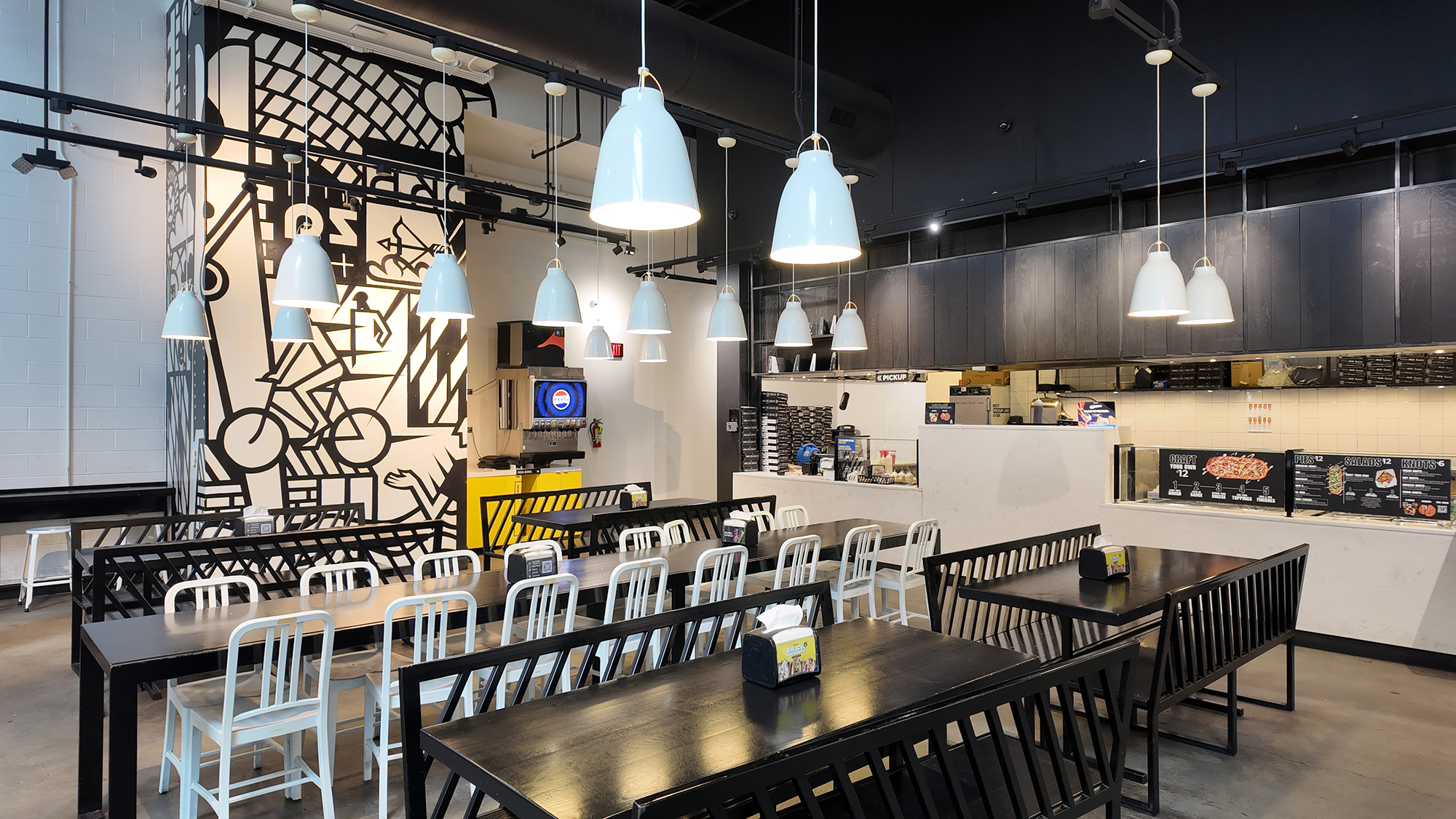
The same principle applies in a faster, more youth-driven context. At &pizza, the issue was an algorithm-led service that produced randomised playlists, repeated tracks too often, and failed to reflect the brand's bold identity. Once again, the challenge was not just selection. It was alignment. The soundtrack had to feel connected to the guest experience rather than simply filling the silence.
The challenge gets harder at portfolio level
Single-site restaurant music is one challenge. Multi-brand groups are another. There, the question is not just what suits one space, but how to build structure across a whole portfolio without making every concept sound the same. That was central to our work with McNellie's Group, where more than 25 locations and around 20 distinct brands required 18 bespoke music strategies. The goal was not sameness. It was clarity. The portfolio needed enough structure to feel coherent, but enough flexibility for each concept to sound right on its own terms.
What made the project work was not simply the strategy, but the discipline of the rollout. Each concept had to be understood on its own terms, then delivered in a way that did not disrupt trading. We block-booked consecutive afternoons to focus on each brand properly, then launched seven concepts a week and took every site live within three weeks. Since rollout, staff feedback has been strong and site-level data has helped refine the music throughout the day, turning the project into an ongoing process rather than a one-off creative gesture. That balance between consistency and emotional connection also echoes broader customer experience thinking, including HBR's argument that value increasingly sits in how an experience is staged as a whole.
What operators often get wrong
Most restaurant music problems come back to a few familiar habits. The first is treating music as background in the most literal sense. If it is only there to avoid silence, it is unlikely to do much more than that. The second is using one logic all day, even though service windows have different behavioural goals. The third is chasing energy instead of fit. Louder, faster, or more familiar does not automatically create a better room. In some cases, it simply creates a less coherent one.
The fourth mistake is failing to measure anything. If music is supposed to shape the guest experience, then it should be tested against real outcomes such as turnover time, dwell time, product mix, staff feedback, or category sales. Without measurement, the conversation stays subjective. With measurement, it becomes much easier to refine. Mainstream discussion of restaurant noise and conversation, alongside specialist work on restaurant acoustics and success, points in the same direction: sound should be designed, not left to drift.

A more useful way to think about restaurant music
A better starting point is simple. Begin with the behavioural goal. What should this part of the day feel like, and what should the room be helping people do. Then define the brand boundaries. What kind of music feels true to this concept, and what would pull it off course. From there, shape the energy curve across the day rather than treating every service as the same. Then test the outcome in the real world and keep refining. That process is less glamorous than talking about playlists, but it is usually where the real value sits.
Music in restaurants is often discussed as a matter of taste. Taste matters, but it is only part of the job. The bigger task is to shape atmosphere in a way that supports the food, the service, the guest, and the commercial reality of the room. Research suggests that music can influence pace, spending-related behaviour, perceived authenticity, and return intention. Mainstream writing on background music as a business, on the sound of silence in restaurants, and on how music can either complete or compromise the experience helps underline why these effects are felt so strongly in real spaces.
Our own project work shows the same principle in practice, from reducing breakfast turnover time by 6 minutes to increasing dessert sales and revenue, creating stronger daypart shifts, and bringing more clarity to multi-brand portfolios. The best restaurant soundtrack is rarely the loudest, the coolest, or the most obvious. It is the one that helps the room move in the right way.