The Silent Cost of Bad Retail Music
Bad retail music is rarely neutral. Discover how the right music strategy can shape atmosphere, dwell time, perceived value, staff energy and brand consistency across physical stores.

Physical retail is being asked to do more than ever. Stores now need to create atmosphere, emotion, discovery and brand connection, not just display products and complete transactions. Yet music is still often treated as a background operational detail rather than a designed part of the customer experience.
This article explores why bad retail music is rarely neutral. The wrong sound can weaken brand perception, reduce dwell time, make premium environments feel generic, tire staff, disrupt customer flow and create inconsistency across locations. Drawing on research into store atmospherics, sensory marketing and customer behaviour, it identifies that music should be planned with the same care as interior design, lighting, service and visual identity.
For modern retailers, music is not just about taste. It is a strategic tool that shapes how a space feels, how people move through it, how long they stay and how consistently the brand comes to life. The best retail music strategies are intentional, dayparted, brand-led and actively managed over time
Why Sound Can No Longer Sit in the Background
Physical retail has changed. Stores are no longer simply places where products are displayed, selected and purchased. They are brand environments, social spaces, discovery platforms and, increasingly, destinations in their own right.
That shift has been widely discussed. Harvard Business Review has explored the comeback of the physical store, arguing that stores are evolving into spaces that do more than transact. Earlier HBR analysis on the future of retail experience also pointed towards stores becoming more immersive, service-led and digitally connected. This builds on the wider idea of the experience economy, where businesses compete by staging memorable experiences, not simply selling products.
For years, retailers have invested heavily in the visible parts of that experience. Store design, lighting, fixtures, scent, service rituals, merchandising, packaging and digital touchpoints are all carefully considered. Every material, sightline and customer interaction is expected to support the brand.
Yet music is still too often treated as an operational detail.
A playlist is chosen. A system is installed. Someone decides whether the store should feel “upbeat”, “premium” or “cool”, and the sound of the space is left to run in the background.
That approach is no longer enough.
In modern retail, music is not just there to fill silence. It shapes how a space feels, how people move through it, how long they stay, how they perceive value and how consistently the brand comes to life across locations. It affects customers, staff and the overall atmosphere of the store.
If physical retail is becoming more experiential, sound needs to be designed as part of that experience.

Music is part of the retail brand experience
Every retail brand has a personality. In store, that personality is built through a combination of design decisions: materials, lighting, layout, service style, product presentation and visual language.
Music should be part of the same system.
This is not just a creative opinion. The academic field of store atmospherics has long recognised that environmental cues influence customer responses. Philip Kotler’s foundational paper, Atmospherics as a Marketing Tool, argued that the designed environment can influence buyer behaviour. Research into store atmospherics, perceived value and behavioural intention also shows how environmental cues shape customer evaluation, satisfaction and behavioural response. The relationship between music and customer behaviour has also been explored in The Effects of Music in a Retail Setting on Real and Perceived Shopping Times, which looked at how music can influence both actual and perceived shopping time.
The sound of a store helps customers understand what kind of brand they have stepped into. It influences whether the environment feels considered, energetic, premium, accessible or culturally relevant.
The problem is that music is often selected too loosely. A brand might brief for “cool music”, “luxury music” or “something upbeat”, but those terms mean very different things depending on the audience, product, market and physical space.
A luxury fashion store does not automatically need classical music. A youth-focused brand does not automatically need whatever is trending on social platforms. The right answer depends on the brand’s cultural position, the customer mindset and the role the store is designed to play.
This is where music strategy becomes important.
A strong retail music strategy defines the emotional role of sound within the brand. It considers how the store should feel across different moments, how customers should move through the space, what level of familiarity is appropriate and how music can support the commercial and experiential goals of the environment.
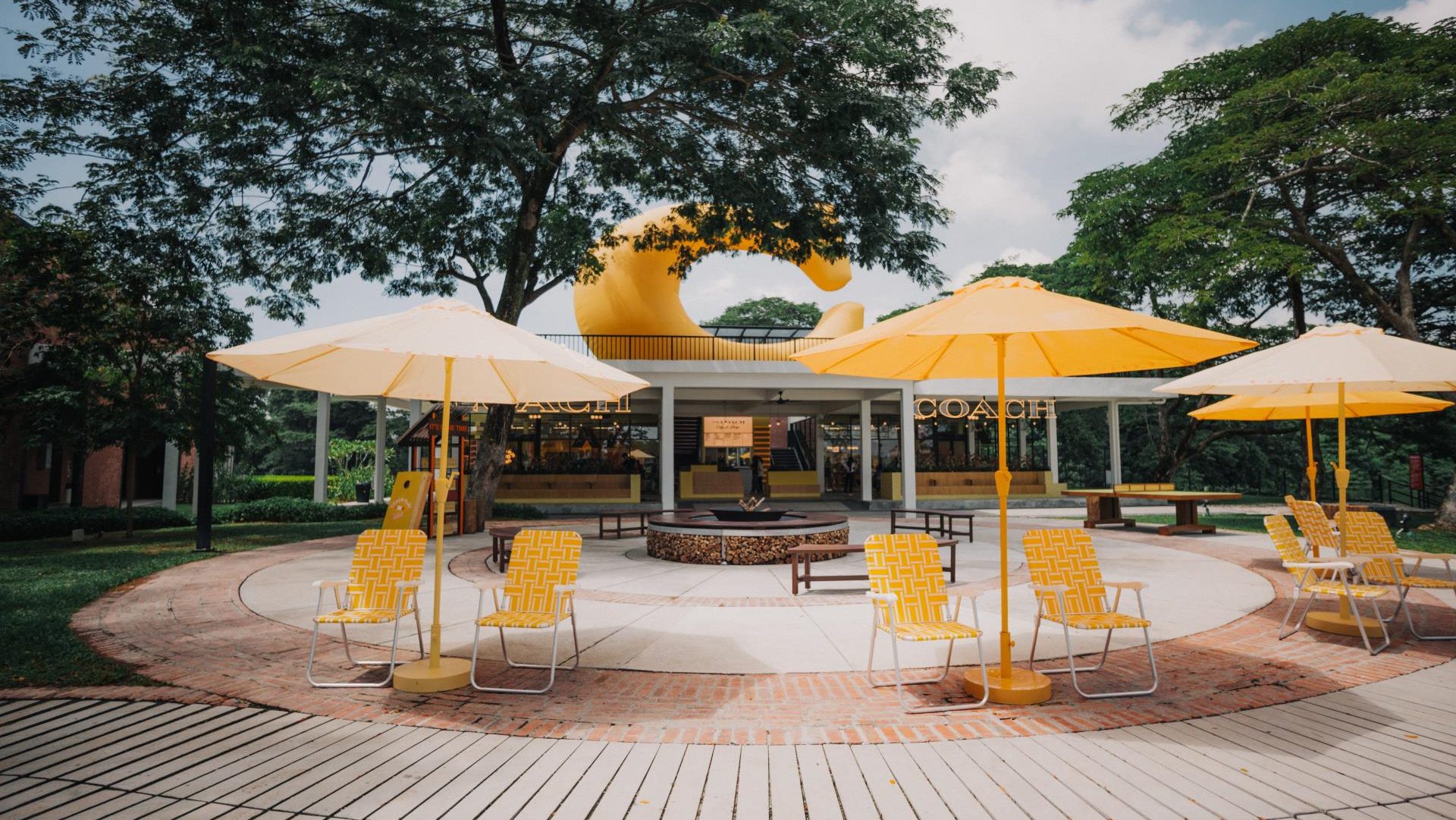
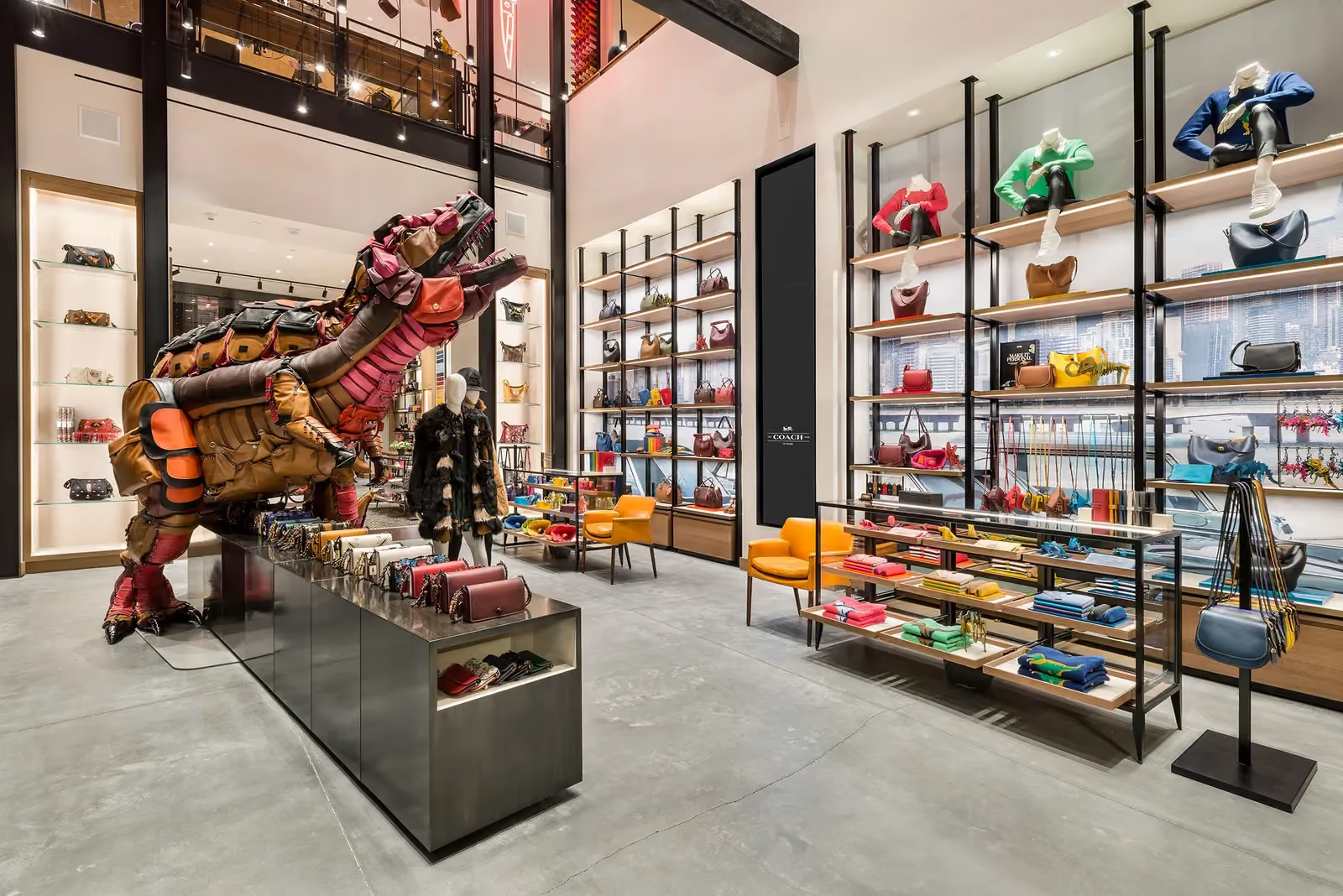
For Coach, Altaura developed regionally adaptive soundscapes that allowed the brand to retain a consistent sonic identity while flexing across different global markets, store formats and audience expectations. The goal was not to create one generic global playlist, but to help each store feel connected to the brand while still feeling culturally relevant in its location.
Music is not just a taste decision. It is a brand decision.
From store to destination
Retailers are increasingly asking more from their physical spaces.
A store is no longer just a channel. It has to justify the visit. Customers can buy quickly and conveniently online, so the physical store needs to offer something different: atmosphere, service, discovery, connection and memory.
Research into retail experience stores has explored how physical environments can create stronger consumer-brand relationships. HBR has also written about the brand power of physical destinations in The Brand Benefits of Places Like the Guinness Storehouse, showing how branded spaces can become valuable experience platforms. Research from Wharton on the impact of experiential stores on customer purchases also supports the idea that physical stores can influence behaviour beyond the immediate transaction.
This is why modern retail is moving towards experience. Flagship stores behave more like cultural spaces. Beauty brands create environments for trial, consultation and content. Lifestyle retailers blur the line between shopping, hospitality and community. Shopping centres are investing in food, leisure, events and dwell spaces to make visits feel more social and less transactional.
Music plays a major role in that shift.
It helps create a sense of arrival. It changes how people feel when they cross the threshold. It can make a store feel alive before a member of staff has even spoken to the customer. It can support moments of discovery, soften quieter periods and give a space a more memorable emotional signature.
That is the difference between music as background and music as atmosphere.
Background music simply plays in the space. Atmosphere is designed around what the space is trying to make people feel.
For retailers trying to turn stores into destinations, that distinction matters. A destination needs identity. It needs rhythm. It needs a reason to stay. It needs to create a feeling that customers associate with the brand and want to return to.
Sound is one of the most immediate ways to do that.

The rise of sensory retail
Retail has always been sensory, but the best brands are now approaching it with far more intention.
Stores are designed around touch, scent, light, spatial flow, service, digital layers and moments of interaction. The goal is not simply to show product, but to create a complete environment around it.
HBR’s The Science of Sensory Marketing explains how brands use sensory cues to intensify perception and strengthen memory. HBR has also explored when sensory marketing works and when it backfires, which is a useful reminder that sensory design needs to be congruent with the brand rather than added for novelty. Research on customer experience throughout the customer journey also frames experience as sensory, emotional, cognitive, behavioural and social.
Sound should have a seat at that design table.
Too often, however, it is brought in too late. Interiors are designed, lighting is specified, visual merchandising is planned and the customer journey is mapped. Then, near the end of the project, music and audio are added as a finishing touch.
That creates risk.
A beautifully designed store can feel cold if the sound lacks warmth. A premium space can feel cheap if the audio system is poor. A busy environment can become tiring if the acoustics are harsh. A flagship can lose impact if the music feels generic or disconnected from the brand.
Sound is not separate from the design of the space. It interacts with it.
Materials affect how music behaves. Speaker placement affects how evenly a store feels covered. Volume affects comfort, pace and staff communication. Acoustics affect whether the environment feels energised or chaotic.
This is why sound should be considered alongside interior design, lighting, AV, operations and brand strategy.
It is not only about choosing tracks. It is about understanding how the environment should perform.
A retail store may need different sonic treatments for entrances, circulation routes, fitting rooms, consultation spaces, cafés, event zones and product displays. Each of those zones may have a different role in the customer journey, and the sound should support that role.
When sound is considered early, it can be integrated elegantly. When it is added late, it often becomes a compromise.
Music, dwell time and the science of staying longer
One of the reasons music matters in retail is that it can influence behaviour.
That does not mean manipulating people. It means shaping the conditions that make a space feel comfortable, engaging and appropriate for the moment.
Research into retail music has repeatedly shown that sound can influence how people experience a shopping environment. The Effects of Music in a Retail Setting on Real and Perceived Shopping Times explored how music affects both time perception and behaviour. The Interaction of Retail Density and Music Tempo found that music does not work in isolation, but interacts with the wider store environment. Research on music and aroma influences on shopper behaviour and satisfaction also shows how atmospheric elements can affect emotions, satisfaction and behavioural responses.
Music can affect how quickly people move, how long they browse, how relaxed they feel and how much time they perceive has passed. But the relationship is not always simple. Fast music does not automatically make people buy more. Slow music does not automatically make them stay longer. Loud music is not always more energetic.
Context matters.
The right sound for a busy fashion store on a Saturday afternoon is unlikely to be right for a premium skincare consultation on a Tuesday morning. A shopping centre entrance may need a different energy from a food court, mall walkway or leisure zone.
The role of music is to support the right pace.
In some stores, the goal may be to encourage exploration. In others, the priority may be flow and efficient movement. Some environments need to feel relaxing and generous. Others need to feel vibrant and social.
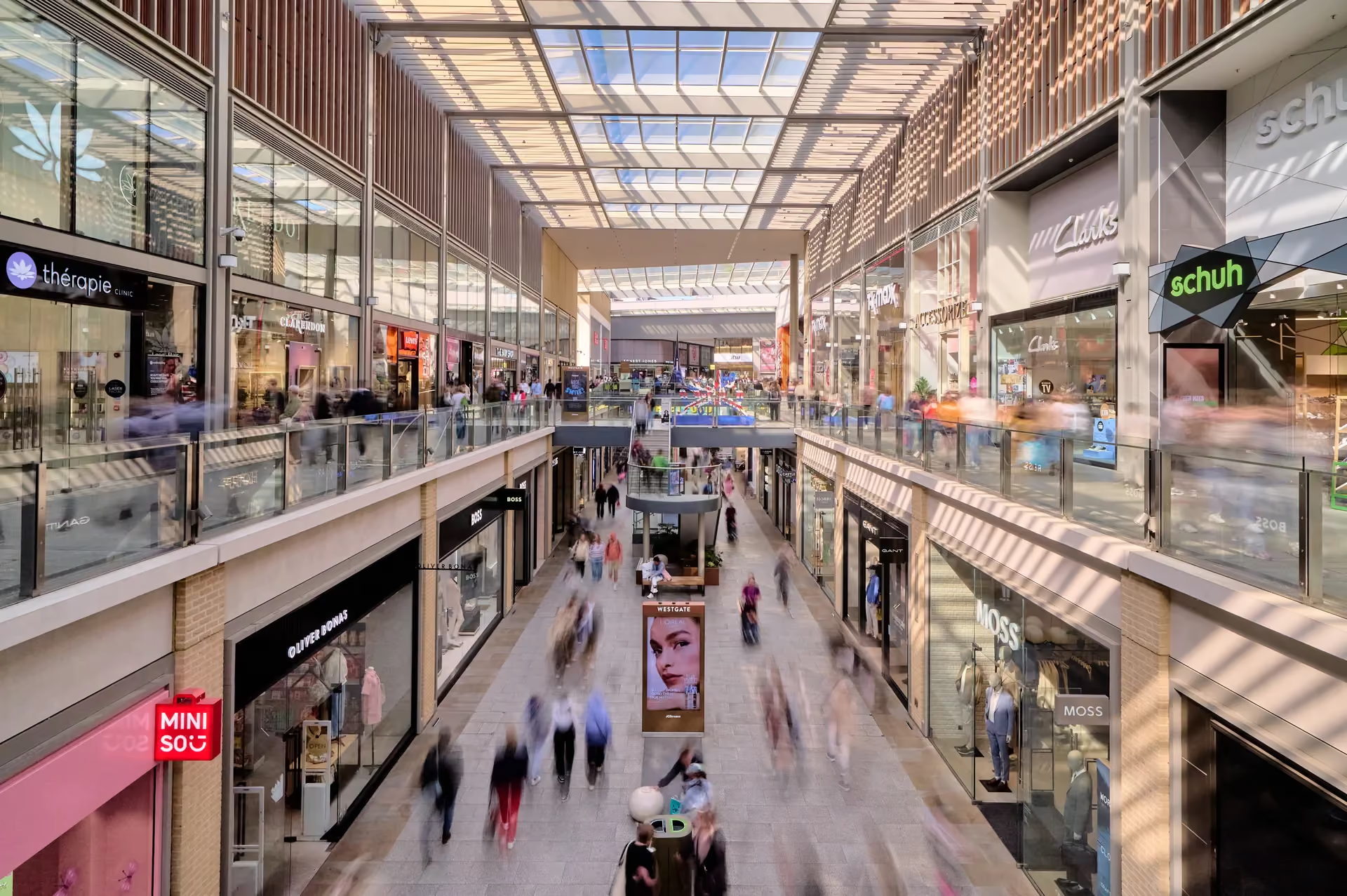
This was central to Altaura’s work with Landsec, where different retail environments required music that could adapt to the rhythm, audience and use case of each location. A shopping centre is not a single mood. Entrances, malls, leisure areas and food and beverage zones all have different behavioural roles, and music needs to support each one with the right level of energy, familiarity and pace.
The question is not: “What music do people like?”
The better question is: “What should the customer feel and do in this part of the store, at this time of day?”
Music changes the perception of value
Music has a powerful effect on perceived value.
It can make a space feel more premium, more accessible, more youthful, more refined or more culturally relevant. It can support a product’s price point or quietly undermine it.
This connects closely to research on atmosphere and value perception. Studies reviewing store atmospherics, perceived value and behavioural intention show how environmental cues shape customer evaluation. HBR’s work on sensory marketing highlights how sensory cues can influence brand perception beyond rational product attributes. Research on music and aroma influences on shopper behaviour and satisfaction further demonstrates that atmospheric elements can influence emotions, satisfaction and behavioural responses.
This matters because customers do not judge a brand purely by the product in front of them. They judge it through the total experience surrounding that product.
A beautifully made item can feel less desirable in the wrong environment. A premium interior can feel less convincing if the music is too generic. A brand that wants to feel contemporary can feel dated if the sound is stuck in an old idea of what “cool” means.
Music carries cultural signals.
A sparse electronic track, a jazz-influenced groove, a polished pop record or a deep house instrumental all communicate different things. Even when customers are not consciously analysing the music, they are absorbing its cues.
The wrong music can create a mismatch.
That mismatch can be subtle but damaging. It can make the customer question the quality of the brand without knowing why. It can make the product feel less special. It can make a carefully designed space feel less coherent.
For premium and luxury retail, this is particularly important. The goal is not always to sound expensive in an obvious way. In fact, obvious “luxury music” can quickly become clichéd. The real skill is in finding a sonic world that supports the brand’s specific expression of value.
Music can strengthen the value story, but only when it is chosen with precision.
Why retailers need dayparted music, not one playlist
One of the biggest mistakes in retail music is expecting one playlist to work all day.
A store does not have one mood. It changes throughout the day and week. Customer behaviour changes. Staff energy changes. Footfall changes. The role of the space changes.
This aligns with wider research into customer journeys and atmospheric design. Understanding Customer Experience Throughout the Customer Journey shows that experience is built across multiple touchpoints rather than a single moment. Exploring International Atmospherics highlights the importance of matching music to the store environment. The Interaction of Retail Density and Music Tempo also shows that the impact of music depends on the surrounding conditions, not just the track itself.
Morning may need to feel open and welcoming. Lunchtime may need more momentum. Peak trading periods may need clarity and confidence. Late afternoon may need warmth and uplift. Weekends may need a stronger social feel.
A single playlist flattens all of that.
Dayparted music allows the store to move with its natural rhythm. It gives the atmosphere shape. It helps the sound feel more human, more responsive and more aligned with the customer journey.
This does not mean changing the brand identity throughout the day. The music should still feel connected to the same world. But the energy, pace and texture can shift.
For example, a fashion retailer may start the day with lighter tracks that ease the store open. As footfall builds, the music can gain rhythm and presence. During peak trading, it can become more confident. Later in the day, it may become warmer and more social.
A shopping centre may need even more variation. Entrances, malls, leisure areas and food and beverage zones each have different functions. A single generic playlist across the whole estate will rarely do the job properly.
This is why dayparting is central to effective music strategy. It recognises that atmosphere is not static. It should evolve with the behaviour of the space.

The Damage Is Subtle, But Customers Feel It
Bad music is rarely neutral.
When the music is wrong, repetitive, badly controlled or poorly matched to the brand, it actively works against the experience.
Studies on the effects of music as an atmospheric variable show that music can influence mood, evaluation and behaviour in retail and service environments. Research on music and aroma influences on shopper behaviour and satisfaction also identifies music as part of the wider atmospheric toolkit that can shape retail experience. More recent work on auditory environments in fashion retail reinforces the point that music contributes to emotional engagement, dwell time and customer satisfaction.
The issue is that many retailers only notice music when it becomes a problem. But the effects of bad music can be subtle.
It can make customers leave faster. It can make a premium environment feel cheap. It can make a store feel dated. It can create stress in spaces that should feel calm. It can make staff disengage from the system, turn the music down, switch it off or override it with something else.
It can also create inconsistency across locations.
For multi-site retailers, this is a serious issue. If every store interprets the music differently, the brand starts to sound different everywhere. One site may feel vibrant and on-brand, while another feels flat, chaotic or disconnected from the customer experience.
Poor music also creates operational friction.
If staff do not understand the system, they may use it incorrectly. If the music is too repetitive, they may complain. If the playlists are not updated, the store starts to feel stale. If there is no clear governance, local teams may take control in ways that damage consistency.
These problems often go unnoticed because music is invisible. It is easy to ignore until it becomes annoying.
But customers feel it.
They may not leave the store saying, “The music strategy was wrong.” They may simply feel that the space was uncomfortable, generic, too loud, too quiet, too chaotic, too flat or not quite for them.
That feeling matters.
Retail is full of small signals. When they align, the experience feels effortless. When they clash, the brand loses coherence.

Retail staff are part of the music strategy too
Retail music is not only for customers.
Staff hear it more than anyone. They experience the same playlists for hours at a time, across full shifts, quiet moments and peak periods. If the music is irritating, repetitive or badly matched to the working environment, staff will feel it first.
This matters because employee experience and customer experience are closely connected. HBR has written about putting employees first to create better customer experiences, while broader research into service environments and customer behaviour shows how environmental conditions can shape satisfaction and behavioural intention. Work on music and aroma influences on shopper behaviour and satisfaction also points to mood and emotion as important mechanisms in how people experience commercial spaces.
Staff are part of the atmosphere.
Their energy, mood and comfort affect the customer experience. A store can have the right design, product and service model, but if the environment is wearing staff down, the overall experience suffers.
This is why staff feedback should be part of the music strategy.
That does not mean the store team should control everything. Complete local control can quickly lead to inconsistency and off-brand choices. But staff should have a way to feed back when something is not working, when a playlist feels too repetitive or when a daypart does not match the actual rhythm of the store.
The strongest systems balance central strategy with local intelligence.
There should be enough structure to protect the brand, but enough responsiveness to keep the experience alive. Regular updates, feedback loops, seasonal refreshes and clear control settings all help make the strategy more effective.
A good retail music programme is not something you set once and forget.
It needs to be managed, updated and allowed to evolve.
Retail music should be designed with intention
Retailers are investing more in physical experience because the store still has something powerful to offer. It can create emotion, connection and memory in a way digital channels cannot. It can make a brand tangible. It can turn browsing into discovery and shopping into a more meaningful experience.
That is why the conversation around physical retail has moved beyond transactions. HBR’s article on the comeback of the physical store describes stores as evolving spaces with new strategic roles. Research into experiential retail stores shows how physical environments can deepen brand relationships. HBR’s Welcome to the Experience Economy remains a useful lens for understanding why brands now compete on the quality of experiences, not just the quality of products.
But if sound is left to chance, the experience is incomplete.
Music affects how a store feels from the moment a customer enters. It shapes pace, atmosphere, perceived value, dwell time, staff energy and brand consistency. It can support the architecture of the space or work against it. It can make a store feel more alive, more premium and more memorable, or it can make the whole experience feel generic.
The future of retail is not silent, and it is not simply louder.
It is more intentional.
Music should be planned with the same care as the interior, lighting, service journey and visual identity. It should be connected to the brand, tailored to the space, adapted across the day and managed over time.
Because in modern retail, music is not part of the background. It is part of the atmosphere, part of the brand and part of how the space performs.